Software and SaaS development
Digital products that solve, scale and evolve.


Insights
Guides, analysis and lessons on product, artificial intelligence, growth, communications and cloud.
Editorial themes
Digital products that solve, scale and evolve.
AI systems for real-world processes.
Demand, catalogue, partners and conversion.
Every conversation in the right channel.
Available, observable and ready services.

Learn what record removal means, how to propagate it across connected systems, and which exceptions to plan for so synchronization does not restore records or disrupt workflows.
↗
Compare uploads routed through your application server with direct-to-storage uploads. Choose an approach based on file size, security, user experience, and operational capacity.
↗
Prioritize technical debt using evidence of impact, risk, and the cost of delay. Decide whether to fix, mitigate, monitor, or temporarily accept each issue.
↗
Evaluate each request by its need, impact, and alternatives to decide whether to add it, swap it for another task, defer it, or decline it.
↗
A cache can reduce latency and load, but it also introduces stale data and operational overhead. Learn when it pays off, what to store, and how to measure the results.
↗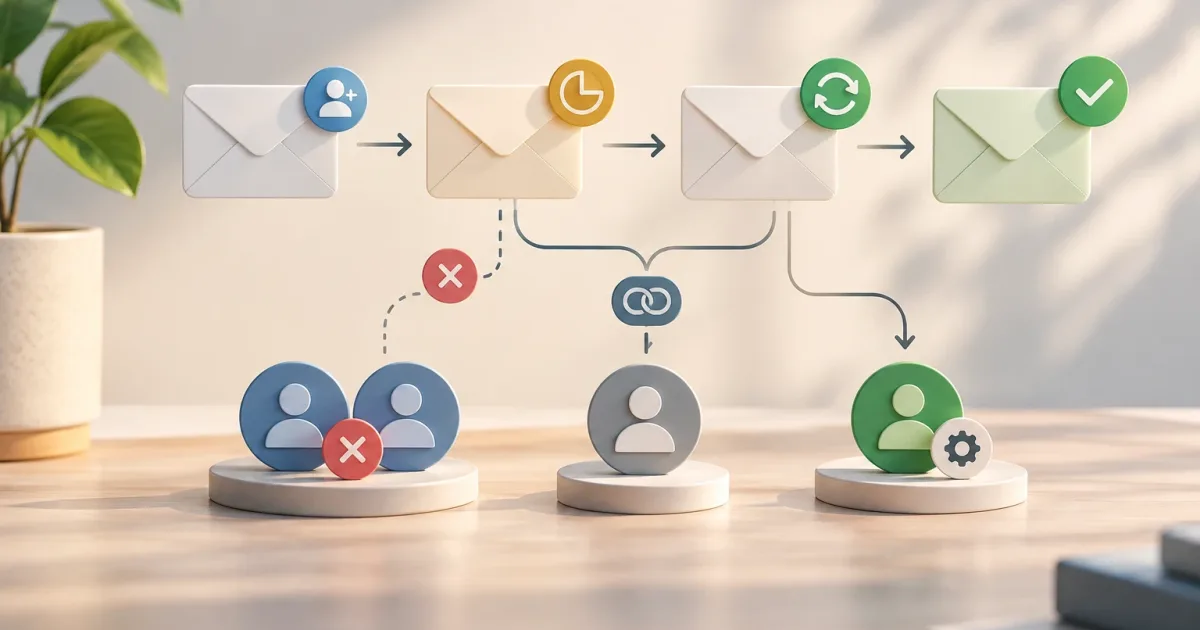
Design SaaS invitations with clear states, expiration rules, safe resending, and consistent handling of duplicate emails, existing accounts, and permission changes.
↗
Define what information each agent needs to resolve a case, and how to limit, retrieve, and log access without replicating unnecessary data.
↗
Learn how to deploy schema changes while application versions coexist, using validation and gradual removal to reduce disruption and risk.
↗
Learn when a backfill is necessary, how to define its scope and choose a method, and how to validate results without duplicating notifications, charges, or changes.
↗
A favorable primary metric does not always justify a launch. Learn how to weigh secondary signals, set guardrails, and choose the right next step.
↗
Design a clear settings hierarchy so each organization inherits what it needs, allows justified exceptions, and can always understand which value is currently active.
↗
A secure transfer separates organizational ownership from individual permissions, verifies the incoming administrator, and plans for disputes, mistakes, and orphaned accounts.
↗